
Schley County Multi-Day Arrest Record
The official Sheriff's Office site offers agency and contact details. It posts no rolling 72-hour, weekly, or dated arrest log. Ellaville Police post none either. The gap runs in both directions. No same-day feed exists, and no longer archive sits on any county site. For a span crossing a weekend or holiday, ask the record custodian for entries. Request them by arrest or booking date. Publication date is not arrest date. Transport and later data entry can place one event under several dates.
How to Read Schley Arrest Reports
Work backward from official records. A list patched together from search results will not match what the county actually holds.
- Choose exact start and end dates and state whether they refer to arrest or booking.
- Ask Schley County Jail or the Sheriff’s Office which existing register or report covers the span.
- Separate entries by arresting agency, since Ellaville Police or a state agency may hold its own incident report.
- Match the booking number, agency, and dates rather than relying on a name alone.
- Check the relevant clerk for the later case disposition.
Chasing a current event instead of a date range? Use the Arrested Today route. The wider report request exists to catch entries processed after the first day.
Fields in a Schley Arrest Report
The official sites show no sample public log. Treat this table as a request guide, not a claim about columns the county actually displays.
| Field | How to read it |
|---|---|
| Legal name and booking number | Use both to reduce a mistaken match. |
| Arrest and booking dates | Determine which date controls the requested range. |
| Arresting agency | Points to the office that may hold the incident report. |
| Charges as booked | Initial charges, not adjudicated facts. |
| Bond, hold, or detainer | Status recorded at that time, subject to change. |
| Release or transfer | Explains movement out of the county jail. |
| Record source and check date | Shows when and where the data was verified. |
Booking numbers and court case numbers belong to different systems. A jail register cannot give a case's final result, and a news article cannot prove full jail coverage.
Weekend Arrest Reports and Delayed Entries
Schley County has no public log to measure. No posting pattern can be documented. Doubt any claim of a Monday update or a routine weekend surge. Stretch any date range across the whole weekend. Leave room for bookings finished after the arrest date.
When the jail says someone was released or transferred, follow up. Ask whether the record itself is still available. Present custody, an old booking, and a later court outcome are three distinct facts. Keep them separate. After a transfer, the receiving facility is the source for current custody.
Note: Ask the custodian whether the date range is searched by arrest time, booking time, entry date, or release date.
Official Records Behind the Blotter
The Sheriff’s Office page shows the official agency contact that replaces an online blotter.

The Sheriff's page maps the route to records. It carries no rolling arrest report, though the Georgia Archives public-safety schedule does set retention benchmarks for booking and jail records.
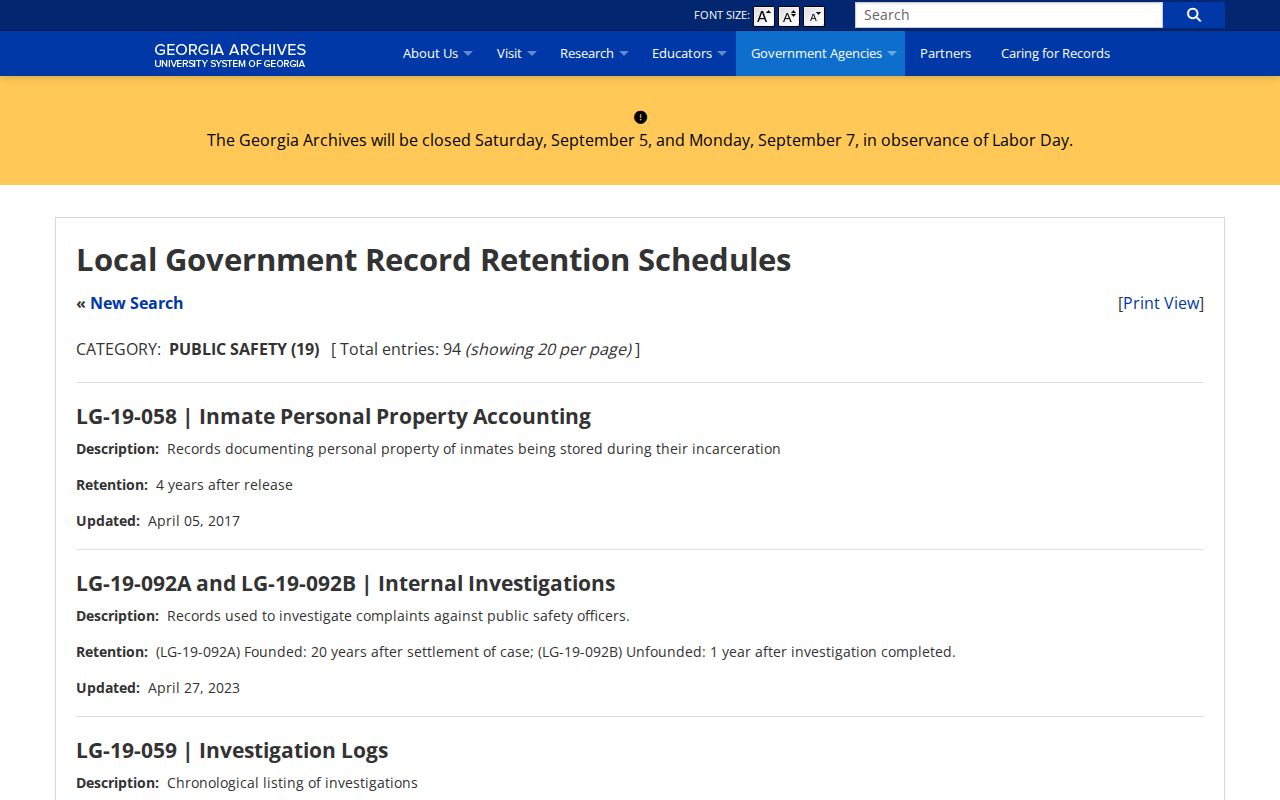
The schedule frames an older request. It cannot prove where Schley County keeps any particular file.
Schley Arrest Reports in Local News
WTVM and WALB have covered selected serious or unusual Schley County arrests. GBI issued an official release in an Ellaville case. A story can help. It may pin down an agency, a date, or a case timeline. That still is not a daily or weekly blotter. One caution about images. An article photo may be an agency picture, a portrait, or another illustration. It may not be a booking photograph. The GBI press release shows what official event-specific reporting looks like.
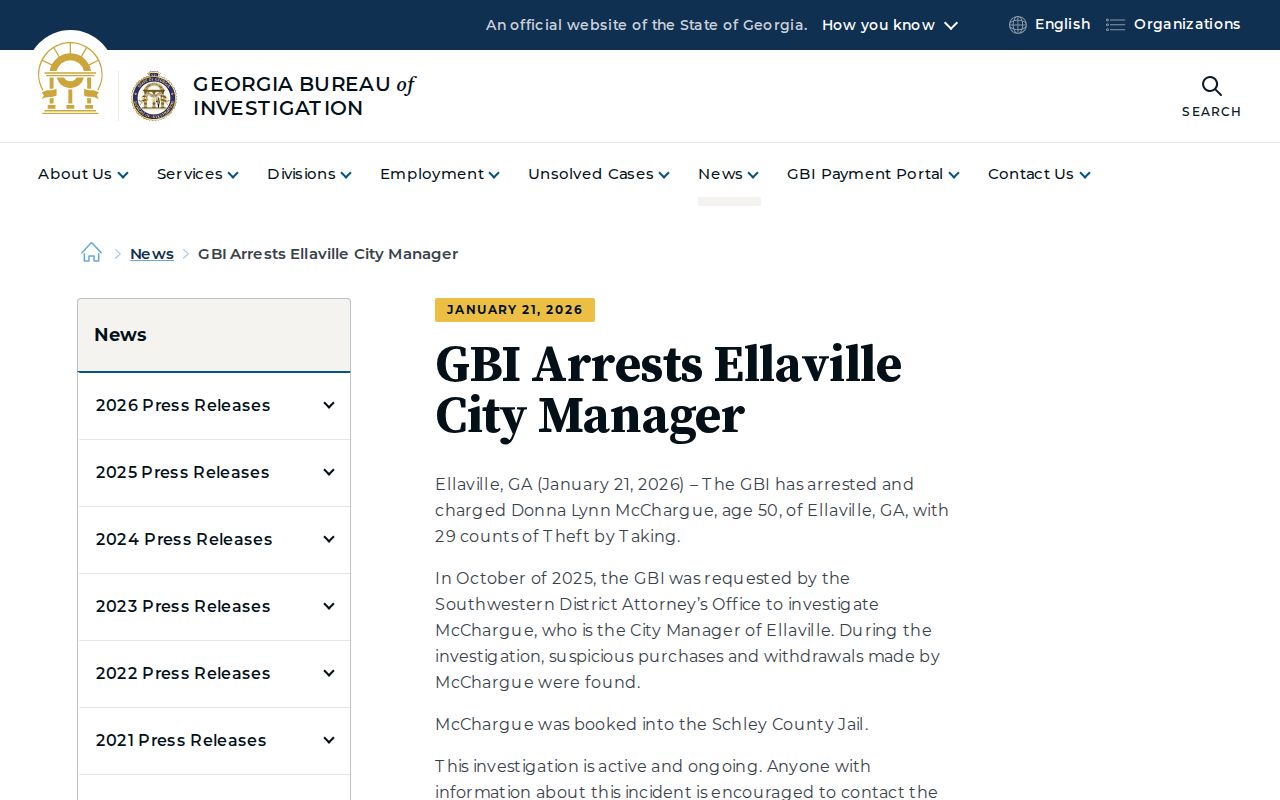
The GBI document backs one dated event. It cannot stand in for a complete Schley County arrest log. Unofficial county indexes sit stale or absent for Schley. Keep them secondary. A blank aggregator result proves nothing about whether an arrest or booking exists.
Archives for Older Schley Bookings
Georgia's local-government schedule sets a floor of ten years after release for jail booking records. Jail registers get ten years after the last entry. Arrest and booking summary statistics carry a five-year benchmark. Those periods say nothing about the fate of one Schley file. Ask directly whether a record is active, in storage, destroyed under law, or on hold.
Historic Schley County News scans run from 1889 through 1939. They serve history, not custody questions. Start with the Sheriff, the Superior Clerk, or the county records officer before contacting any archive. Call an archive last. A "no record located" reply does not prove an arrest never happened.
Requesting Schley Records by Date
A precise written request names the custodian, the record type, and the date span. Ask for an existing jail register, booking record, or agency arrest report. Do not request a new weekly list. Say whether electronic copies will do. Request a cost estimate before charges pile up. Georgia guidance calls for available records within three business days, or an explanation of timing, estimated cost, and the legal basis for withholding.
That framework does not promise a full release. Juvenile, victim, medical, sealed, restricted, and investigative material can be withheld or redacted under applicable law. Booking-photo access faces separate Georgia restrictions. Never assume a photo was posted online. Nor is every field in an internal record open to a requester.
Keep the agency response and your request reference. If a search comes back empty, ask how files are indexed. They may sit under arrest date, booking date, release date, or agency case number. A record can also be stored elsewhere. It may have been transferred, or lawfully disposed of after the schedule and any record hold.
Crime Statistics Are Not Arrest Reports
Numbers can mislead in Schley County. The GBI's 2024 Crime Statistics Summary lists an index-crime rate of 9.47 per 1,000 for the county. But that figure counts reported crimes, not people booked into jail. An arrest report, by contrast, is tied to one person and one date. The two answer different questions, so keep them apart when you search for recent arrests. Crime rates lean on agency participation, reporting habits, and population estimates. None of these tell you who was arrested or when. Schley County is small, too. A handful of extra incidents can swing a per-capita number wildly. A rising rate does not mean weekend arrests climbed. A falling rate does not mean the jail is quiet. For any real question about a booking or a person in custody, use the dated arrest record itself. Leave the annual statistics as background.
Arrest Reports Do Not Prove Guilt
Custody questions and case questions go to different offices. For who is in the Schley County jail right now, call the jail. For how a case ended, ask the court that handled it.
Note: Always pair an arrest entry with its source date, and update any published detail with a dated court record.