
Georgia VINE and Schley Arrests
Georgia's victim-services program runs VINE across the state. So a search can cover bookings far beyond Schley County. Two doors lead in. The public hub is VINELink, and the direct tool is the Georgia person search. Both are live applications. Some controls load only after the page opens.
Schley County's sheriff site lists no VINE link. The state's static pages name no Schley feed either. That proves nothing. It just means you test coverage in the live search. Or confirm with Schley County Jail at 229-937-2101.
How to Check a Schley Arrest
Search one person at a time. Add enough detail, like a birth date, to separate similar names. Keep that personal data inside the official interface or share it only with the agency itself.
- Open the official Georgia person-search route and confirm that Georgia is selected.
- Choose the available county or facility filter and look for Schley County or Schley County Jail.
- Enter the person’s name. Add lawful identifying details only when the interface needs them.
- Compare all returned records carefully, including facility and identifying information.
- Open the correct record and note the custody status plus the date or time shown.
- If no result appears, call the jail and ask whether the person was booked, released, transferred, or entered under another facility.
For a fresh booking, the Arrested Today page lays out the contact-first route. VINE data can lag intake, so it never replaces a direct check with the jail.
Schley County Search Screen
The official Georgia VINE person search is the state interface for testing county and facility coverage.
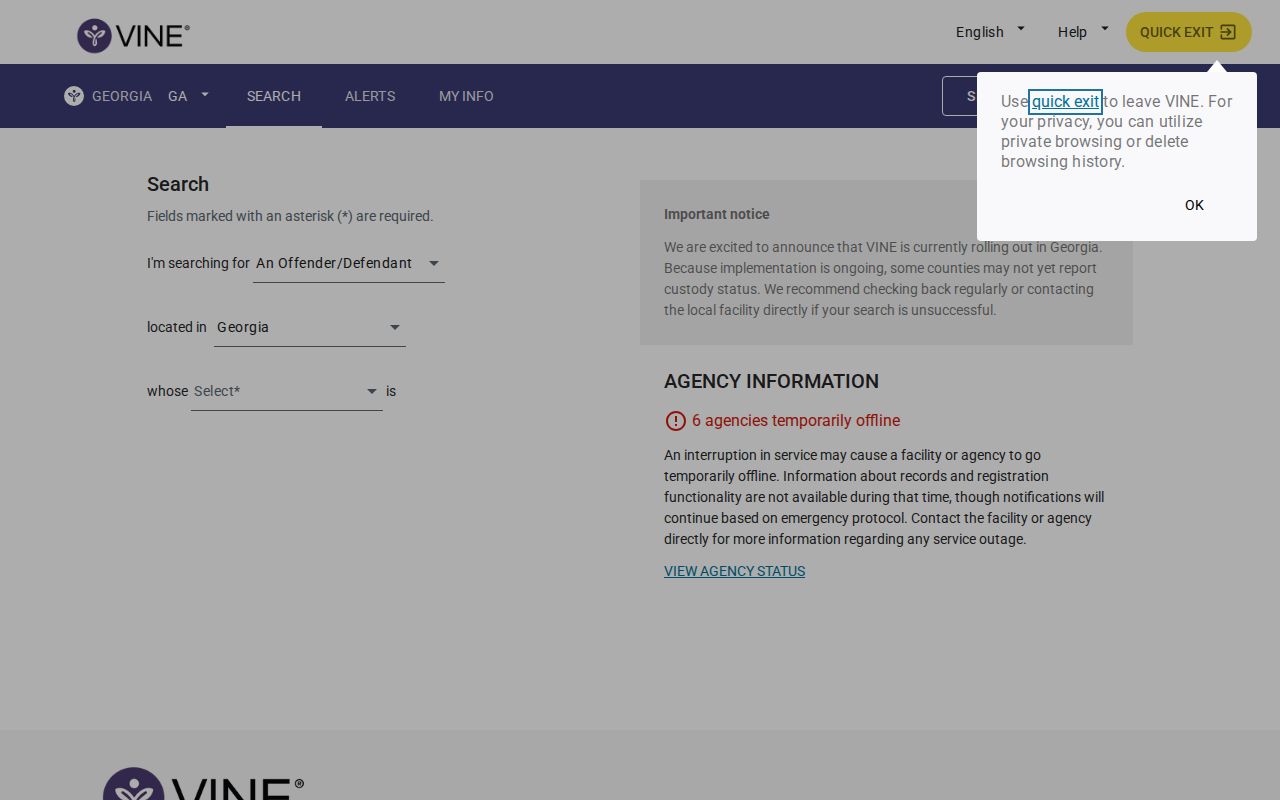
The search page itself protects privacy, since it reveals no real victim's contact details. The VINELink public site also walks through the custody search and registration workflow.
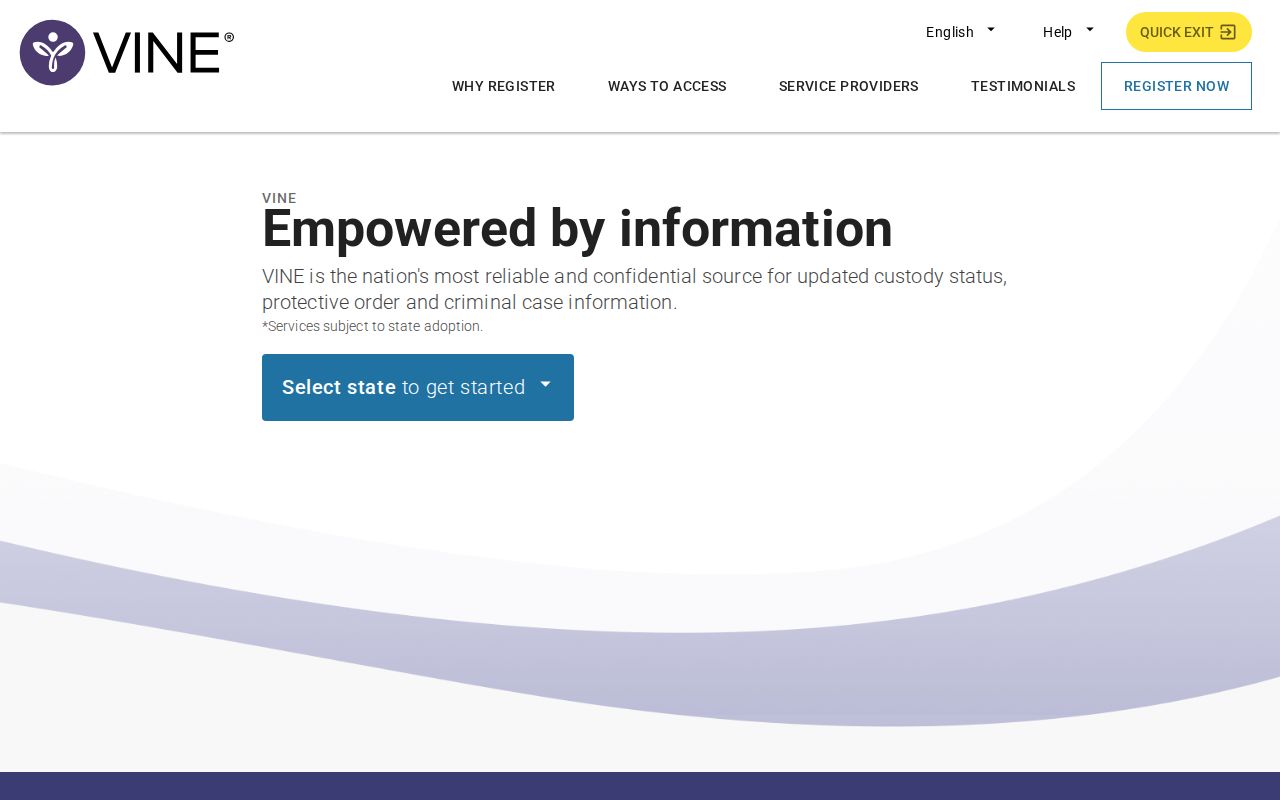
This screen shows where notification options appear after a safe search. It is not a Schley County inmate roster.
What a VINE Custody Result Shows
Labels change depending on the agency and the application's state. Treat the result as a current-status record, and verify any field that drives an urgent decision.
| Possible field | How to use it |
|---|---|
| Name and identifying details | Compare more than the name to avoid a false match. |
| Custody status | Shows the status reported by the participating source at that moment. |
| Facility | Identifies where the record is associated and whom to call. |
| Offender or booking identifier | Helps distinguish records and communicate with the agency. |
| Status date or update time | Shows how recent the displayed report may be. |
| Notification option | Allows registration when that record and event type support alerts. |
A "not found" message has several meanings. The name may be spelled differently, intake may be incomplete, or the person may already be released. The facility might not participate, or custody may sit in another system entirely. None of it rules out an arrest.
Register for Georgia Custody Alerts
Registration starts from a confirmed person record. Channels and event types vary, so read the live page for what's offered.
- Open the matching custody record and select the registration or notification control.
- Choose an offered contact channel, such as telephone or email, and enter it privately.
- Select the available custody events, which may include release, transfer, escape, or another change.
- Create and retain any PIN or confirmation information the application requires.
- Complete verification and save the registration confirmation.
- Use the support route if the alert cannot be created or the record changes unexpectedly.
Never enter real victim contact data into a shared or public screenshot. Keep registration details private. A single automated notice can't substitute for direct official confirmation when safety or court duties are on the line.
VINELink Support for Schley Searches
The official VINELink support page provides help for access, searching, registration, and notification issues.
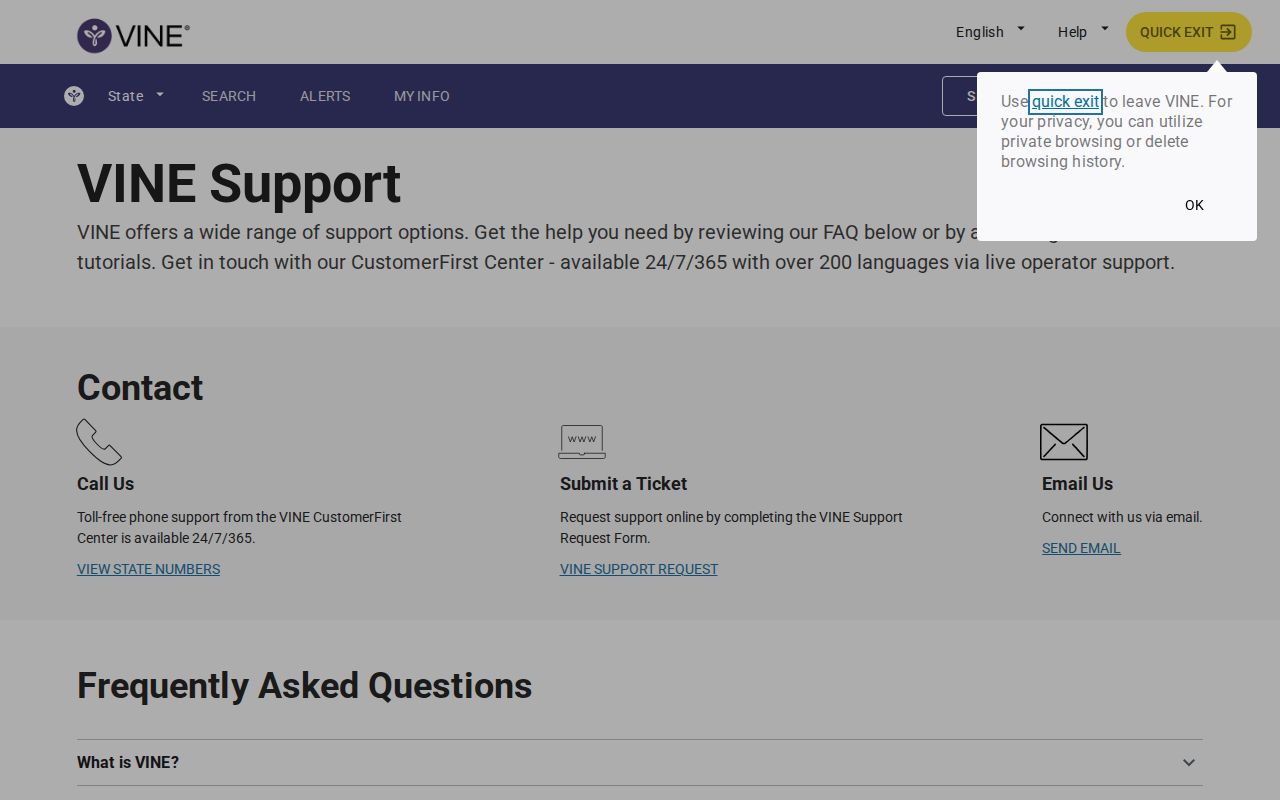
Support staff handle application problems, while the jail stays the authority on Schley County custody. Georgia's VINE training material explains the state's victim-notification role. VINELink is not a booking-photo source or a court record. Its job is custody information and timely notice.
Limits of a Schley VINE Check
VINE is no substitute for Schley County Jail's own intake record. A very recent arrest can land before data entry. It can also precede a transfer into a participating system. Someone released may show no current custody even though the booking record still stands. When an entry is missing, ask the jail. Was the person booked elsewhere or moved?
Other systems answer other questions. The Federal Bureau of Prisons locator tracks federal custody, not county bookings. ICE runs a separate detainee locator for immigration holds. The Georgia Department of Corrections query covers state prison. It may never list a short county-jail stay.
Note: Record when the VINE result was checked and confirm urgent custody facts with the facility named in the result.
When a VINE Alert Needs Verification
An automated alert helps. The named facility remains the source for a time-sensitive custody fact. A transfer notice may show movement without explaining the full case path. Call the facility shown. Use the offender or booking identifier when you have one. If safety is at risk, follow emergency and victim-services guidance. Do not wait for the app to refresh.
Keep the registration itself healthy. A changed phone number, filtered email, forgotten PIN, or unconfirmed signup can interrupt delivery. Account problems go to the official support page. Never enter another person's contact details without permission. Keep notification data out of public notes or screenshots.
VINE may report a release yet say nothing about bond, supervision, or the next hearing. Those answers sit with the jail, the court, the prosecutor, or another office. Pair a VINELink timestamp with a direct facility check. Add a separate court review when a legal outcome matters.
Schley Arrest Status Across Systems
One arrest in Schley County can pass through several record systems. The county jail handles booking and short-term custody. If the person is moved, a receiving county facility becomes the current source. GDC matters only once Georgia state correctional custody begins. Federal BOP and ICE tools track entirely different jurisdictions. Treat them as separate paths rather than gaps in a Schley County arrest roster.
Different systems also label the same person differently. VINE may show an offender identifier from a participating agency. The jail relies on a booking number, while the arresting office logs an incident number. Courts assign their own case number. Write each identifier down with its source, because swapping them across systems leads nowhere.
Alerts Do Not Show Court Outcomes
A release or transfer alert reports a custody event, nothing more. It does not reveal whether charges were dropped. Nor does it say a case closed. Bond, release, transfer, and case outcomes live in separate records. For later filings, use the Schley County courts path.
Shared names, lagging records, and sudden custody changes can all distort an alert. Before drawing conclusions, verify the person, the facility, the timestamp, and the court record that follows.